ArticleRoutines & Transitions
When plans change: why predictability helps
Why unexpected changes take extra energy for many children, and gentle ways home and school can prepare together.
3 min read
Resource library
Showing 11 resources
Why unexpected changes take extra energy for many children, and gentle ways home and school can prepare together.
3 min read
Words, gestures, signs, picture boards and speech devices all count as real communication — and how home and school can listen together.
3 min read
Practical ways caregivers and educators can share everyday observations and build steady conversations without pressure.
3 min read
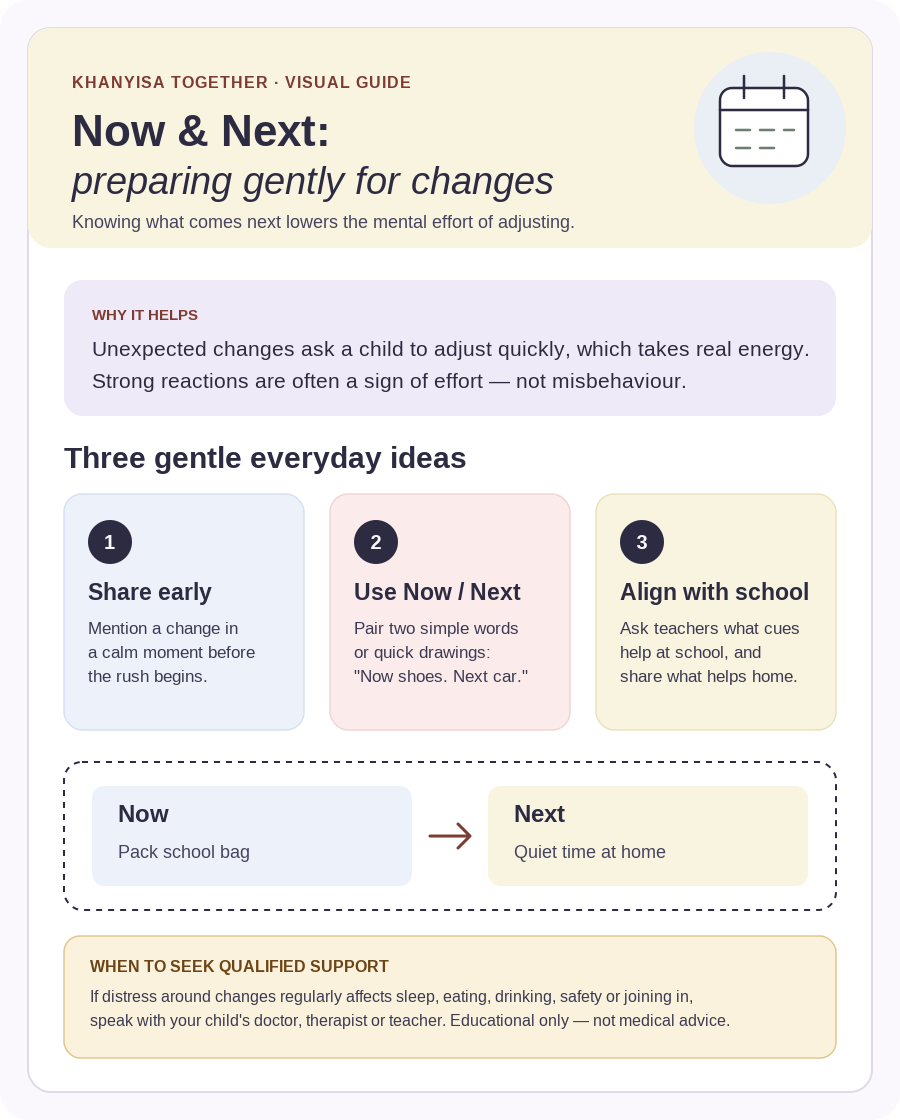
One-page visual guide showing why predictability helps and three everyday steps caregivers can try around transitions.
Visual guide · SVG & A4 PDF
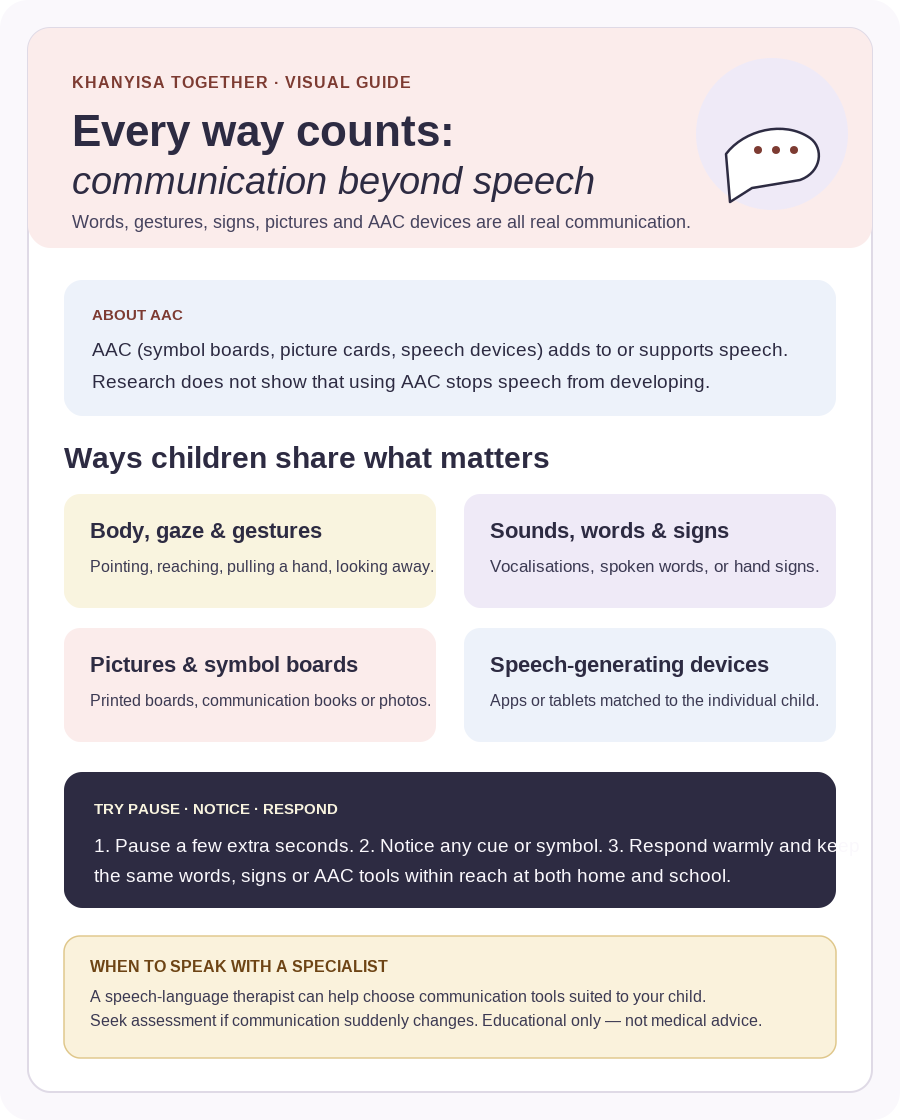
One-page visual guide to gestures, sounds, picture boards and AAC — plus the simple Pause, Notice, Respond rhythm.
Visual guide · SVG & A4 PDF
A clean, print-ready A4 sheet with large blank Now and Next boxes to draw, write or place pictures on by hand.
Printable A4 PDF · 1 page
Printable one-page sheet with gentle conversation starters, what home and school might notice, and space for personal notes.
Printable A4 PDF · 1 page
The World Health Organization's caregiver-focused programme materials, designed to be adaptable across countries and settings.
International guidance · WHO publication
Overview of the WHO Caregiver Skills Training programme, its aims and how it supports everyday family routines and communication.
International programme page · WHO
A peer-reviewed clinical report summarising evidence on assessment, communication supports and co-occurring conditions (written primarily for professionals).
Peer-reviewed clinical report · Pediatrics (2020)
Professional clinical overview explaining feeding and swallowing difficulties and when specialist assessment matters.
Professional clinical resource · ASHA